HISTORY
Our roots, our story

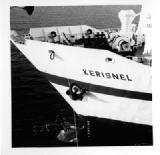
Brittany Ferries, an emblematic Breton company, was founded in 1972 in Roscoff, Finistère, thanks to the initiative of Alexis Gourvennec, a Breton farmer and trade union leader. At that time, Brittany suffered from significant geographic and economic isolation, with agricultural producers seeking solutions to export their crops to foreign markets, particularly the United Kingdom. The concept of establishing a maritime link to transport these products to England gradually emerged, leading to the creation of BAI (Brittany–England–Ireland) and the launch of the Company’s initial services, inaugurated with its first vessel, the Kérisnel, on January 2, 1973.
As the company continued to grow, it expanded its network. In 1974, BAI rebranded as Brittany Ferries, diversifying its operations and welcoming its first passengers, driven by a shared ambition to open new routes and connect regions more effectively.
The 1980s and 1990s were periods of strong growth for the Company. Brittany Ferries acquired Cherbourg-based Truckline Ferries and inaugurated the Cherbourg–Poole route in 1986. That same year also marked the opening of the Ouistreham–Portsmouth route with the launch of Duc de Normandie. The Company invested in new, modern, and comfortable ships, such as Bretagne in 1989 and Val de Loire in 1993. In 2004, the company reached a new milestone with the arrival of Pont-Aven, a luxury vessel that quickly became the fleet’s flagship. Designed like a cruise liner, this ship offered unprecedented comfort for passengers, consolidating Brittany Ferries’ position as the leader in cross-Channel maritime service.
The company continued to diversify and expand its network in the early 2000s, adding new routes such as Portsmouth–Santander. In 2009, the introduction of Armorique marked another chapter in the company’s history. Route openings followed: Portsmouth–Bilbao in 2011, Le Havre–Portsmouth in 2013, and Cork–Santander in 2018.
This growth period was also marked by new challenges. Brittany Ferries faced increased competition, economic fluctuations, and, above all, growing environmental concerns. These challenges prompted the company to modernise its fleet and seek solutions to reduce its carbon footprint, notably by exploring the use of liquefied natural gas (LNG), a cleaner alternative to traditional fuels. In 2018, the Company ordered three new ships, two of which were LNG-powered. During the 2020 health crisis, the company managed to maintain its freight routes to support trade and ensure the circulation of essential goods—a strategic decision that enabled Brittany Ferries to survive thanks to the resilience of its teams and the support of partners. In 2022, the Company celebrated its 50th anniversary, marking the beginning of a new era—still rooted in its Breton origins but resolutely focused on the future.
Brittany Ferries then operated a fleet of 13 ships, including new hybrid vessels such as Salamanca, Galicia, and Santoña (2023), and committed to projects aimed at reducing its environmental footprint, with ships using cleaner technologies like LNG. Each year, the Company transports several million passengers and remains a major player in European maritime transport between France, the UK, Spain, and Ireland.
The ecological challenge continues to dominate Brittany Ferries’ priorities. In 2025, a major step was taken with the inauguration of Saint-Malo and Guillaume de Normandie, the company’s first hybrid ferries, capable of operating partly on electricity. These vessels represent a significant advance in Brittany Ferries’ energy transition—a recognition of quality, comfort, economic performance, and environmental respect, as evidenced by multiple awards and distinctions received in 2025.
The year 2025 was also marked by the signing of a new 15-year contract with the States of Guernsey to operate ferry services to the Bailiwick. A significant increase in passenger numbers was recorded from the outset on the proposed routes, opening new horizons for travellers and strengthening the Company’s role in linking regions.
2025 also saw the inauguration of the rail-freight terminal at the port of Cherbourg, enabling the launch of a multimodal highway between Cherbourg and Mouguerre (Pyrénées-Atlantiques), linking Spain to the UK. This initiative marks a major milestone for the future of freight in France by promoting modal shift from road to rail and sea.
Today, more than ever, Brittany Ferries embodies the Breton spirit of initiative—an audacious company that has built bridges between people and opened Brittany to the world. Its ability to reinvent itself in times of crisis, innovate in its services, and promote sustainable tourism demonstrates its essential role in the maritime transport market. It remains faithful to its original mission: to open up a region while fostering exchanges between France and the other countries it serves. A model of success and resilience that continues to inspire today as it did yesterday.
Our People
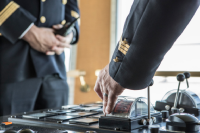
Brittany Ferries - the story of many hundreds of passionate staff members enjoying fulfilling careers